Brands & RetailersJuly 23, 2026
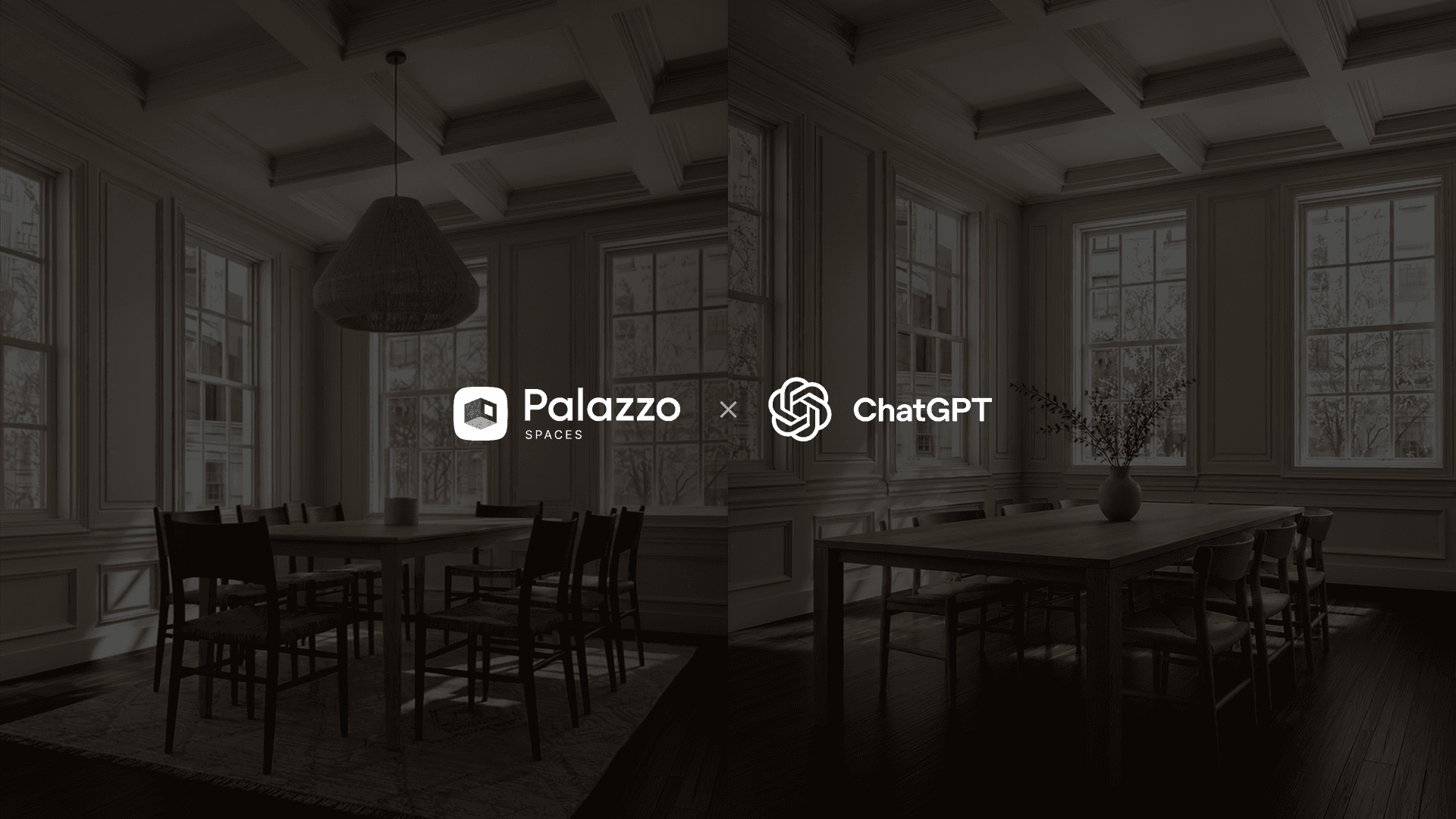
A side-by-side comparison of ChatGPT vs Palazzo Spaces for real estate virtual staging in 2026. Real furniture vs AI-generated images. Which tool should agents trust their listings with?
You've seen it on social media. Agents plugging listing photos into ChatGPT, Midjourney, or free AI image generators and getting back "staged" rooms in seconds. It's free. It's fast. And it looks... fine.
But here's the question nobody's asking: is that staged room helping you sell the listing, or hurting your credibility?
Virtual staging usage among real estate agents grew over 300% between 2024 and 2026. Among agents who use any form of staging, approximately 65% now use virtual staging either exclusively or alongside physical staging.
With that kind of adoption, the question isn't whether to use virtual staging. It's which tool to trust your listings with.
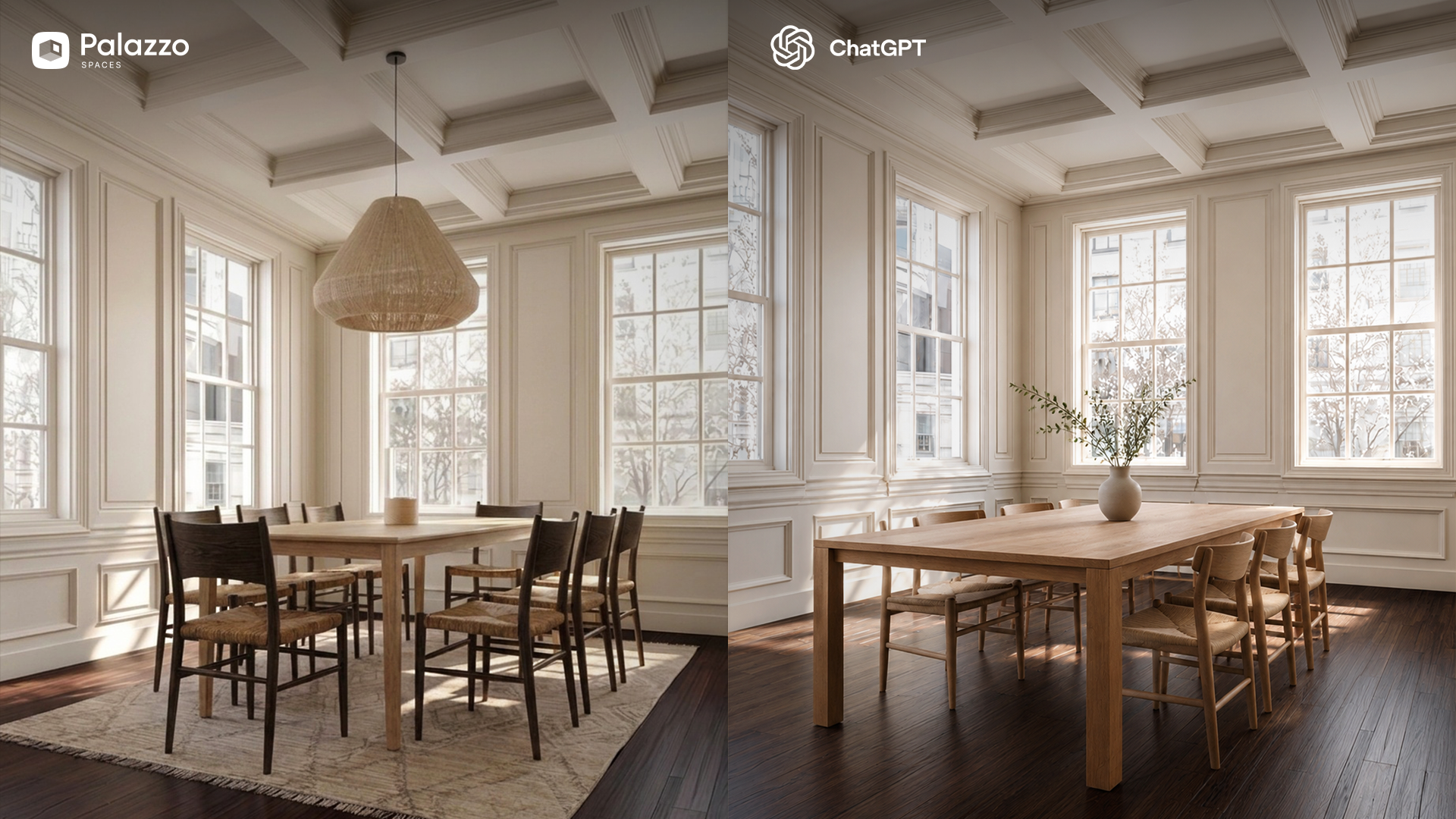
The ExperimentWe took a real empty listing photo and ran it through both tools. Here's what happened.
Cost: Free with ChatGPT Plus ($20/month)
Result: A generic dining table, mismatched chairs, a decorative vase. The furniture doesn't exist. It's generated — pixels that look like furniture but correspond to nothing you can buy.
Scale accuracy: None. The table was undersized for the room. The chairs lacked the weight and proportion of real pieces.
Uniqueness: Low. ChatGPT generates from the same training data, which means every agent's "staged" room starts looking the same. The generic oak table industrial complex.
MLS risk: High. This is AI-generated content with no disclosure framework. NAR guidelines increasingly require disclosure of AI-altered imagery.
Cost: $50/month (unlimited rooms)
Result: A real dining table, catalog-sourced chairs, a woven pendant light. Every piece of furniture exists in a real catalog and is purchasable by the buyer.
Scale accuracy: TrueScale technology sizes furniture to the room within approximately 1 inch from a single photo.
Uniqueness: High. Palazzo's Aesthetic DNA system curates furniture based on design preferences — so no two rooms look the same.
MLS risk: Low. Real furniture, real products, real catalogs. This is visualization with real products, not fabrication.
The ResultsWhen you put the two results side by side, the difference is obvious. ChatGPT gives you a room that looks generically nice but doesn't hold up under scrutiny. The proportions are off, the lighting doesn't quite match, and when a buyer asks "where can I get that dining table?" — you have no answer.
Palazzo gives you a room where every piece is real, correctly sized, and linked to a product page. The buyer doesn't just imagine the room. They can buy it.
The StakesStaged listing photos receive 3–5x more views than unstaged photos on major platforms. Click-through rates are 40% higher for staged photos. But those numbers assume the staging is credible.
When a buyer sees a staged room and asks, "Where can I get that dining set?" — you need an answer. With ChatGPT, the answer is "it doesn't exist." With Palazzo, the answer is "here's the link."
We're not saying never use ChatGPT for staging. If you're testing a concept, brainstorming design directions, or creating a quick social post where accuracy doesn't matter — go for it. It's a creative tool.
But for listing photos that go on the MLS, get sent to buyers, and represent your professional reputation? You need furniture that exists, dimensions that are accurate, and a tool built for real estate.
The Bottom LineChatGPT is a language model that can generate images. Palazzo is a visualization platform built for real estate agents, with real furniture from real catalogs, sized accurately to real rooms.
Ready to see the difference? Try Palazzo Spaces free for 14 days. Visualize your first listing in under 60 seconds.