Brands & RetailersJuly 23, 2026
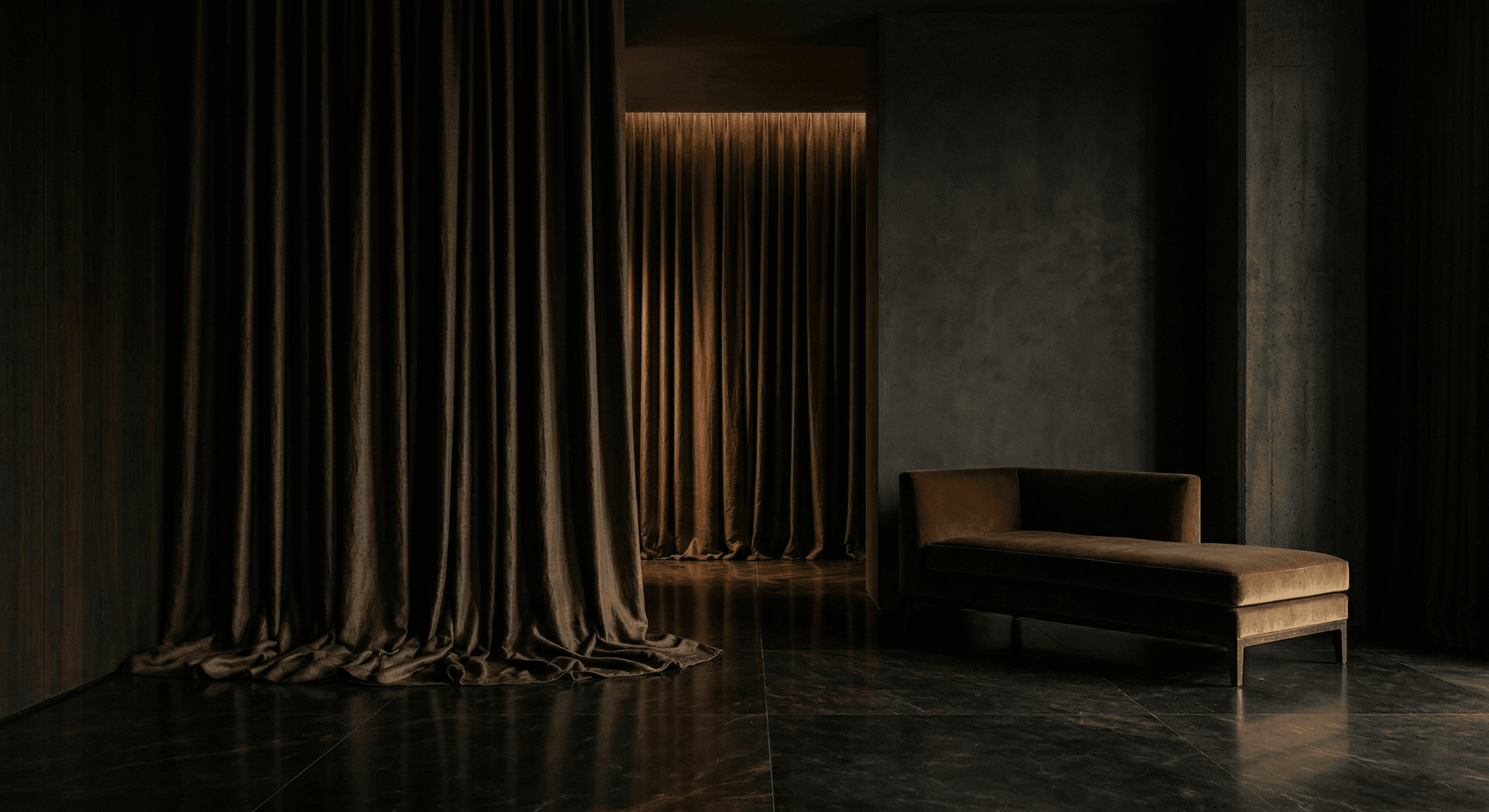
Why a list of numbers knows more about your taste than you do — and what that means for how furniture finds you.
The hardest problem in interior design isn't taste. Everyone has taste. The hardest problem is that taste is almost impossible to communicate accurately — and almost impossible for a machine to understand.
The problemWhen you walk into a room and feel immediately at ease — or immediately wrong — you're not running a conscious checklist. You're responding to something your nervous system has been calibrating your entire life: how light falls across a surface, whether the furniture mass feels settled or precarious, whether the palette is asking something of you or giving something to you.
That response is real, consistent, and deeply personal. But it's almost entirely nonverbal. Ask most people why they like the room they like and they'll reach for labels that aren't quite right — "I'm minimalist" (but they have a velvet sofa), "I like natural materials" (but their apartment is full of concrete and steel). The labels flatten something that is actually rich, dimensional, and specific.
This is the problem that recommendation systems have tried and largely failed to solve for two decades. Asking people to rate furniture on a five-star scale produces data about nothing in particular. Behavioral tracking eventually tells you what someone buys — but not why, and not what they would have bought if the right thing had been in front of them at the right moment.
Aesthetic DNA is our answer. Not a label. Not a category. A precise mathematical description of where someone sits in a multi-dimensional space of aesthetic preference — and a system that can match them to the right products, rooms, and experiences because of it.
The simplest analogy is color. Any color in the visible spectrum can be described precisely with three numbers: red, green, blue. You don't need a label — "warm amber" or "dusty coral" — to specify it exactly. You need coordinates. RGB gives color a position in space that can be computed with: mixed, compared, transformed.
Aesthetic DNA does the same thing for interior design taste. We measure 18 dimensions of aesthetic preference, split between how someone feels about form and material, and how they respond to color. Every person, every product, and every style gets a position in that space. When positions are close together, there's a match. When they're far apart, there's a gap.
Each dimension measures where a person sits on a spectrum between two poles. Not a binary choice — a continuous position. Eleven dimensions capture aesthetic feeling, seven capture color response. Together, they're granular enough to distinguish a Warm Minimalist from a Serene Naturalist (both spare, both tactile — but one needs warmth and the other needs honesty of material) and coarse enough to compute with at scale.
The dimensions were designed to be independent of each other — high warmth doesn't predict high ornamentation, and low materiality doesn't predict low visual weight. Each one adds new information. That independence is what makes 18 dimensions sufficient to cover the full range of interior design preference without being redundant.
And because each dimension is a number, not a category, the math becomes interesting. Two profiles can be close on 16 dimensions and far apart on 2 — which tells you something precise about what they share and what separates them. That granularity is what makes the difference between a recommendation that feels obvious and one that feels unexpectedly right.
The archetypesThe 18-dimensional space is precise and powerful — and completely opaque to human intuition. So we added a translation layer: ten archetypes, each one representing a distinct cluster of positions in the space, each one given an identity that people can actually recognize themselves in.
These aren't personality types. They're aesthetic positions — descriptions of how someone relates to the space around them, what they're drawn toward, and what the room they live in is actually for.
The archetypes describe people, not rooms. Two archetypes can produce visually similar rooms from completely different motivations. The Precision Modernist and the Receding Modernist both arrive at spare, cool environments — but the Precision Modernist is after correctness, and the Receding Modernist is after disappearance. Those different underlying drives produce different choices when the decision gets hard.
The quiz that produces your Aesthetic DNA vector takes ten questions and roughly two minutes. It doesn't ask you to describe your taste in words — it shows you images and watches what you choose. Palette grids. Room photographs. Side-by-side furniture comparisons. One rejection: the room that makes you most uncomfortable.
Each answer updates your position in the 18-dimensional space. By question ten, the system has a precise vector that predicts your aesthetic preferences across all the dimensions we measure. The archetype assignment happens instantly, before you've seen the result.
But the quiz is only part of the picture. If you upload a photo of your room before you start, the system does something more interesting: while you're answering questions, it's already generating a transformation of your actual room guided by your emerging vector. By the time you see your result, you don't just find out you're a Moody Romantic — you see what your living room looks like through a Moody Romantic's eyes.
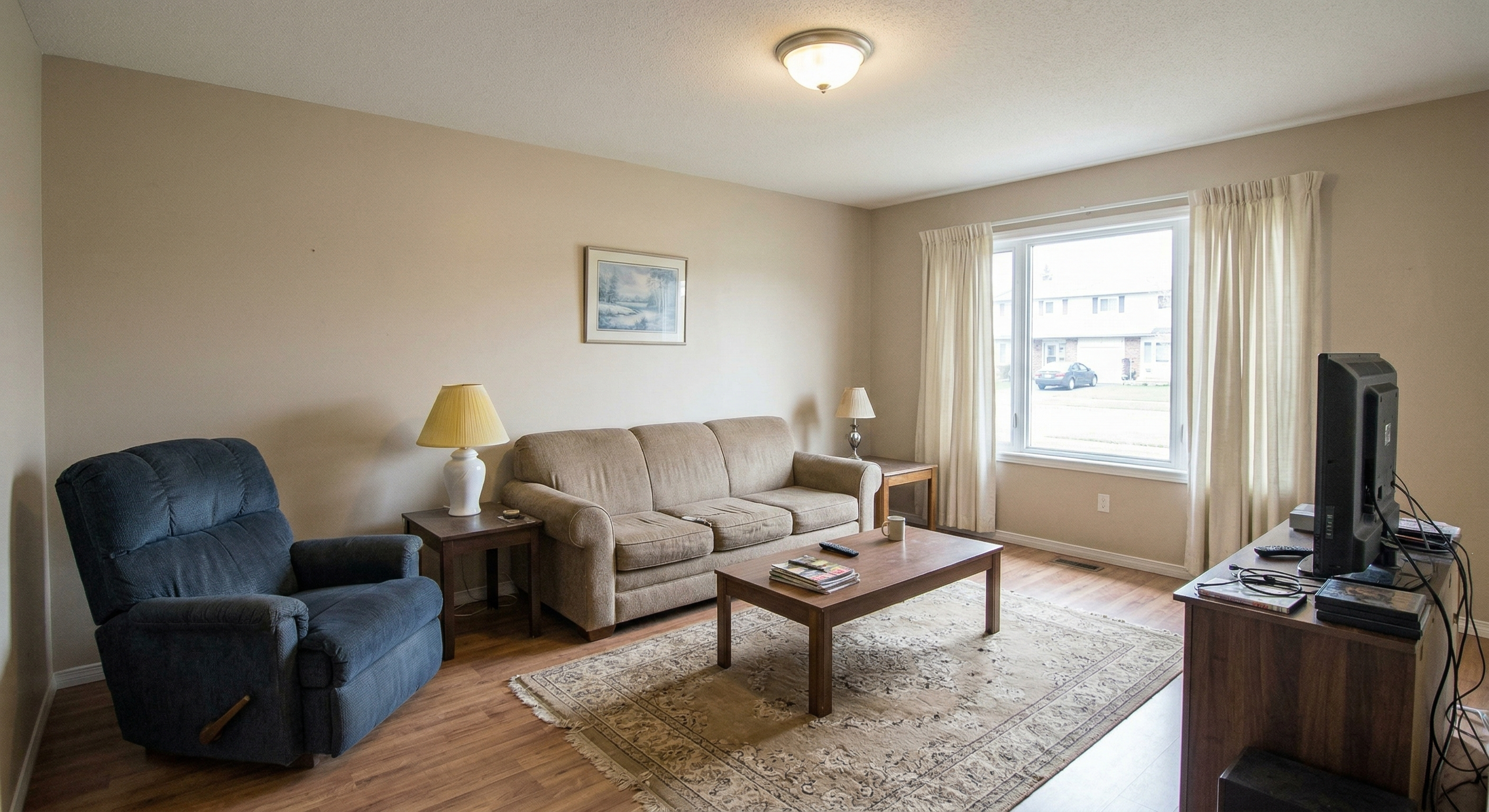 Before
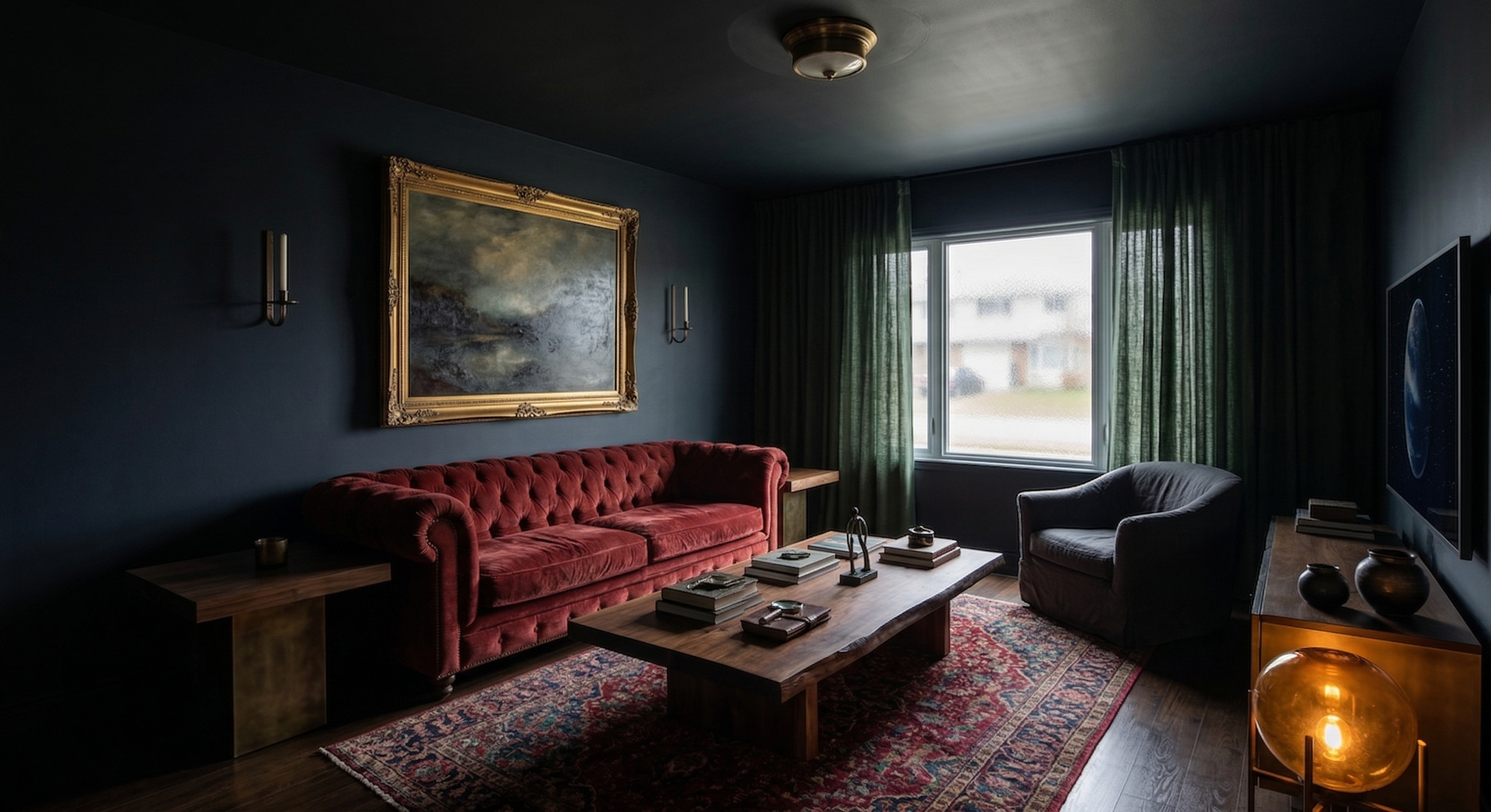 After
After
The before/after transformation uses your quiz answers to drive the generation — not a generic staging, but a rendering of what your room would look like if it fully expressed your aesthetic position.
Why it mattersRight now, the dominant paradigm in furniture commerce is search and browse. You know what you want — roughly — and you go looking for it. The system surfaces results by keyword, by category, by price. It is essentially a filing system that you have to navigate yourself.
What Aesthetic DNA enables is different. Instead of you searching for furniture, furniture can find you — matched not to the keywords you typed but to your precise position in aesthetic space. A sofa that is consistently chosen by people whose warmth score is above 7 and whose visual weight score is above 6 is a more reliable recommendation for you than anything a keyword search could surface.
The math that makes this work is straightforward: once you have a vector for the user and a vector for the product, you can compute how similar they are using a single formula. Products close to your vector rank higher. Products far from your vector rank lower. The recommendation system becomes a distance problem, and distance problems are well understood.
This also changes the cold-start problem entirely. A new user who has taken the quiz is not an unknown. Their vector is known. Their archetype is known. The first products they see can be precisely targeted before they've clicked anything — before they've given the system any behavioral signal at all. The quiz is two minutes of deliberate signal that replaces weeks of passive behavioral observation.
Beyond furnitureThe same system that matches a person to a sofa can match a buyer to a property. Real estate has an even more acute version of the cold-start problem: a listing has to appeal to a buyer who has never been to the property, based on photographs that were staged for a hypothetical average buyer who doesn't exist.
We're bringing Aesthetic DNA to real estate through Palazzo Spaces. When a property is listed, the system reads its visual and structural signals and infers a probable buyer archetype — not a guess, but a prediction based on the aesthetic dimensions the property expresses. The virtual staging targets that archetype specifically.
And when a potential buyer visits the listing, they can take the quiz and see the property staged to their own taste. Not one version of the room that someone else decided was appropriate — their version. Every buyer who visits the same listing can see a different, personalized transformation guided by their own vector.
The buyer whose Aesthetic DNA is a strong match for the property's natural profile sees a transformation that feels like coming home. The buyer whose vector diverges sees an honest picture of the gap — and learns something about what they actually need to look for next.